
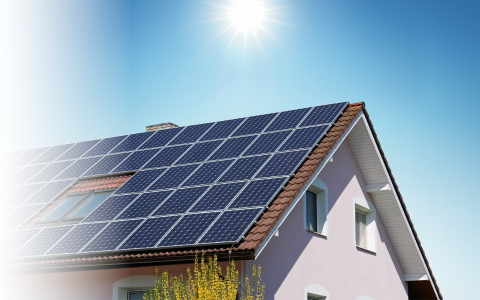
Summary of the new Safe Electric / CRU Publication on automatic changover switches for solar pv 2026.
Introduction
This document examines the integration of solar photovoltaic (PV) systems with automatic changeover switches and their compliance with the National Clauses for Electrical Installations, I.S. 10101.
I.S. 10101 permits the provision of back-up supplies to an electrical installation in the event of failure of the primary ESB Networks supply. Such back-up supplies may include solar PV battery systems, generators, and electric vehicles. However, it is essential that all such systems are installed and commissioned in full compliance with I.S. 10101.
Part 8.82 of I.S. 10101, introduced as a new section under the 2024 amendment, outlines additional requirements for installations that both consume and produce electrical energy. These are defined as Prosumer Electrical Installations (PEIs) and are subject to specific design, protection, and verification requirements.
Assessing the Existing Installation
In accordance with Clause 134.1.9, prior to carrying out electrical works on an existing installation, it shall be determined that the rating and condition of the existing equipment is adequate for the altered circumstances arising from the new works.
Remedial works may be required to ensure safety and compliance, including but not limited to:
-
Absence of a PEN connection (neutralising link)
-
Inadequate main overcurrent protection
-
Deficiencies in earthing and bonding arrangements
Where a potential hazard is identified in the existing installation that does not directly impair the safety of the new installation (or vice versa), a Notice of Potential Hazard shall be issued unless the issue is immediately rectified by the Registered Electrical Contractor (REC).
Automatic Disconnection of Supply (ADS)
The REC must consider the operation of automatic disconnection devices when power is being supplied from each source of supply. It is the responsibility of the REC to design the system in compliance with I.S. 10101 and to provide a Completion Certificate (Cert No. 3) confirming compliance.
The key requirement is that, in the event of a fault, the system must disconnect the supply from all sources of supply. Particular attention must be given to the provision and integrity of the PEN connection (neutralising link) under all operating modes. As different equipment manufacturers adopt varying arrangements, it is essential to test and verify that protective devices behave as expected. Manufacturers’ instructions must always be followed.
ADS in Backup / Island Mode
Automatic disconnection by MCBs or fuses may not be effective when the installation is operating in back-up (island) mode.
A typical battery back-up arrangement in a PV micro-generator system may not be capable of delivering sufficient fault current to operate MCBs or fuses in the event of a live-to-earth fault. This may occur even where fault loop impedance readings in island mode appear acceptable when compared against Table 41.2 or Table 41.3.
In such circumstances, automatic disconnection will rely on Residual Current Devices (RCDs). Consequently:
-
All circuits supplied in island mode must be RCD-protected
-
Refer to Clause 411.4.5, Clause 8.82.8.2.2.5, and Clause 531.3
Note: Where an RCD is used for fault protection, overcurrent protection (MCB or fuse) is still required in accordance with the Regulations.
In addition, to comply with Clause 433.1 and Clause 8.82.7.1, load shedding may be required in island mode. For example, a single-phase micro-generator with a maximum back-up output of approximately 25 A may be unsuitable for large loads such as electric cookers.
Isolation
Compliance with Part 46 and Part 55 is mandatory.
Each electrical installation shall be provided with means of isolation from each source of supply.
-
Clause 462.2 requires a main isolating switch for every installation, located within 2 m of the main supply point
-
Where multiple supplies exist, each supply requires its own isolating device
-
Particular attention shall be given to Clauses 462.3, 551.6.3, and 8.82.6.3.4 to prevent unintended operation of any back-up supply
Battery Locations
Battery installations must comply with Clause 551.8 and manufacturers’ instructions.
Battery locations shall be adequately ventilated. Attic spaces are generally considered unsuitable due to:
-
Inadequate ventilation
-
Fire detection and containment challenges
-
High and fluctuating temperatures
During periods of maximum system output, attic spaces may be unable to dissipate heat effectively, increasing the risk of thermal runaway.
Attics must also provide sufficient fire detection and warning in accordance with Part 56. Dusty environments may obstruct cooling fans, making them unsuitable for fan-cooled battery systems. These considerations equally apply to inverters.
Many modern battery systems are rated IP65, and strong consideration should be given to external installation where permitted by the manufacturer.
Thermal Runaway (UL 9540A):
An uncontrolled increase in temperature caused by self-heating of an electrochemical cell where heat generation exceeds dissipation. This may lead to fire, explosion, or gas evolution.
Earthing System
The earthing arrangements of the installation must be verified, including the PEN connection (neutralising link) and the earth electrode.
In a typical TN-C-S system, the integrity of earthing relies on a reliable PEN conductor connection (Clause 411.4.1). However, in island mode the system may transition to TN-S, relying on:
-
The customer’s earth electrode
-
A separate neutral-earth connection within the back-up supply
-
A system referencing conductor
Refer to Clause 8.82.8.2.2.2 and Figure 8.82.5 of I.S. 10101.
Earth Electrode Verification
Where an earth electrode cannot be visually confirmed, testing in accordance with Clause 6.4.3.7.2 may be carried out (when grid-connected) to verify its presence and effectiveness. Where verification is not possible, a new earth electrode shall be installed in accordance with Part 54.
The measured resistance shall not exceed:
50 V / I∆n
Example:
30 mA RCBO → 50 / 0.030 = 1,666 Ω maximum
Low-current “no-trip” testing methods may be used where safety risks exist.
PV DC Side Earthing and Bonding
In accordance with Clause 712.412.101, PV modules and DC wiring shall be Class II or equivalent. In many domestic installations, bonding of PV frames may not be required unless:
-
Simultaneously accessible exposed conductive parts exist
-
Required as part of a lightning protection system
-
Required by the manufacturer (functional bonding)
An REC may choose to cross-bond frames to allow additional insulation resistance testing as per Clause 6.7.2 of I.S. EN 62446-1.
Warning Labels and Notices
Suitable warning signage must be provided in accordance with:
-
Clause 134.1.7
-
Clause 537.1.2
-
Clause 712.537.4.1 [2]
Signage shall clearly identify:
-
All sources of supply
-
Methods of full isolation
-
Locations of hazardous voltages (PV DC, battery systems, etc.)
Durable, indelible signage is recommended.
Diverter Switches
Diverter switches (e.g. immersion diverters) shall comply with Clause 555.6.
These devices must not be installed in airing cupboards due to fire risk. Inadequate ventilation or obstruction by clothing can cause overheating, electrical failure, or ignition. Manufacturers’ installation instructions must be strictly followed.
Main Supply Conductors
Micro-generators do not generally increase the electrical load of an installation. Existing 10 mm² main supply conductors may be acceptable provided:
-
No significant additional load is introduced
-
Existing conductors are adequate for the installation’s demand
Refer to Clause 134.1.9.
Testing and Verification
Existing installation elements affected by the new works must be verified in accordance with Clause 6.4.1.5, including:
-
Upstream protective devices
-
Main and sub-main conductors
-
PEN connection
-
Earth electrode
New installations shall be tested in accordance with Chapter 6. Additional PV-specific documentation and testing is required under Clause 712.6.101 and I.S. EN 62446.
RCD effectiveness must be verified in both grid-connected and island modes (Clause 6.4.3.8), and functional testing shall be carried out in accordance with Clause 6.4.3.10.
Conclusion
The integration of PV systems, battery storage, and automatic changeover arrangements requires careful design, robust protection measures, thorough testing, and clear documentation.
While guidance may be issued by Safe Electric, the ultimate responsibility for compliance with I.S. 10101 rests with the Registered Electrical Contractor.
References
-
Clause 551 – Low-Voltage Generating Sets
-
Part 712 – Photovoltaic Systems
-
Annex 8.82D – Single-Dwelling Islandable PEIs
Note: This document is guidance only and is not exhaustive. Full compliance with I.S. 10101, ESB Networks’ National Code of Practice, Building Regulations, manufacturers’ instructions, and all applicable standards is mandatory.
View Checklist:
Veep Energy – PEI Compliance Practical Guide (I.S. 10101:2024)