
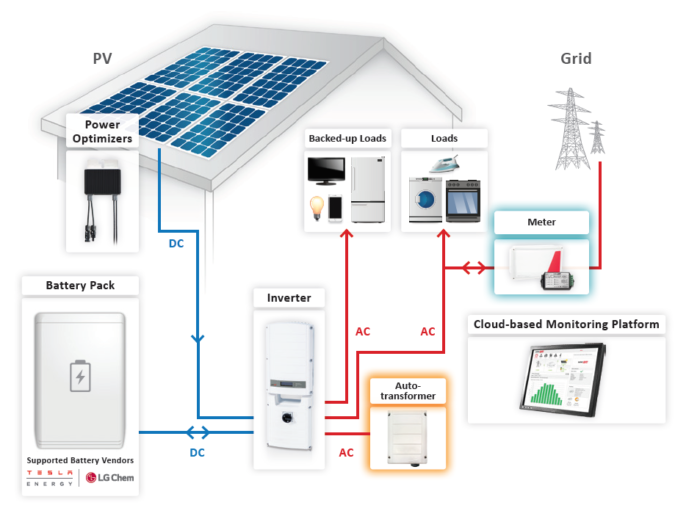
A Simple Explanation for Homeowners
When people hear “battery backup”, they often assume it means the whole house will keep running during a power cut.
In reality, most modern home battery systems are designed as partial backup systems — and that’s intentional, safer, and fully compliant with Irish regulations.
Let’s explain why.
The Key Limitation: Power, Not Switches
In many homes:
-
The main electrical supply can carry 80–100 amps
-
The backup inverter (the battery system) can only supply about:
-
25 amps
-
≈ 5 kW of power
-
So even if the changeover switch is rated for 100 A, the battery itself is not.
Think of it like a wide motorway fed by a much smaller road — the road, not the motorway, sets the limit.
What Happens If Everything Is Left on Backup?
If all household circuits were connected to the battery during a power cut, large appliances could try to turn on, such as:
-
Electric cookers
-
Electric showers
-
EV chargers
-
Heat pumps
-
Immersion heaters
These appliances demand far more power than a typical home battery can safely provide.
That could cause:
-
Battery shutdowns
-
Repeated tripping
-
Overheating
-
Loss of safety protection
For this reason, Irish electrical regulations (I.S. 10101:2024) require systems to be designed so overload cannot happen, not just “advised against”.
What Is a “Partial Backup” System?
A partial backup system supplies power only to essential household circuits during a power cut.
These usually include:
-
Lighting
-
Fridge and freezer
-
Sockets for broadband / TV
-
Alarm systems
-
Basic power needs
High-power appliances are deliberately excluded from backup operation.
This is done by installing a separate essential loads distribution board, which is the only part of the home powered by the battery during an outage.
Why This Design Is Safer (and Required)
This approach:
-
Physically prevents large appliances from running on battery
-
Keeps the system within its safe power limits
-
Ensures electrical protection continues to operate correctly
-
Fully complies with modern Irish wiring regulations
Importantly, this protection is built into the design — it does not rely on the homeowner remembering what not to turn on.
How the System Still “Sees” the Whole House
Even though only essential circuits are backed up, the system still monitors the entire home’s electricity use.
This is done using a meter (called a CT clamp) installed on the main incoming supply cables.
This allows the system to:
-
Correctly manage battery charging and discharging
-
Control solar export
-
Operate safely whether the grid is present or not
This setup is referred to by manufacturers (such as SolarEdge) as a partial backup system, and it is the standard approach for single-phase homes.
The Bottom Line
A home battery is designed to keep the important things running safely during a power cut — not to power the entire house as normal.
Partial backup is:
-
Safer
-
Smarter
-
Regulation-compliant
-
Better for battery lifespan
And for most homes, it’s the right solution.
1-Page Diagram Explanation (Clients & Inspectors)


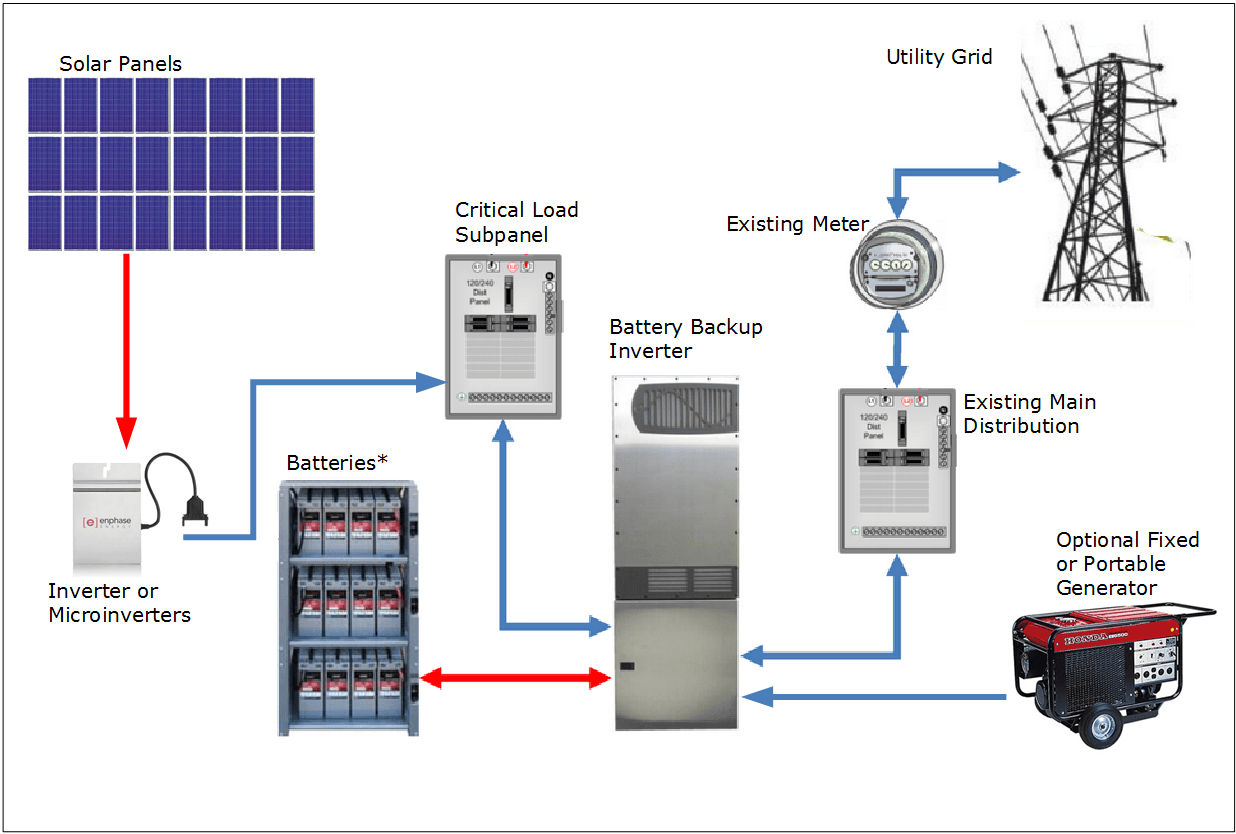
How a Partial Backup System Is Arranged
Normal operation (grid available):
-
The grid supplies the whole house
-
Solar powers loads and charges the battery
-
The battery supports the home and reduces bills
Power cut (island mode):
-
The changeover switch disconnects the grid
-
The battery inverter becomes the temporary supply
-
Only the Essential Loads Board is energised
-
High-power appliances remain disconnected
Key Components Explained
1. Main Distribution Board
-
Contains high-power circuits (cookers, EV chargers, heat pumps)
-
Never supplied by the battery in outage mode
2. Essential Loads Board (Backup Board)
-
Lights, fridge, sockets, broadband
-
Carefully selected to stay within battery capacity
3. Battery Inverter (~5 kW / 25 A)
-
Sets the maximum backup power available
-
Protected from overload by design
4. Automatic Changeover Switch
-
Disconnects the home from the grid during outages
-
Feeds only the essential loads in island mode
5. Energy Meter / CT Clamp on Main Tails
-
Measures total house demand
-
Allows safe system control and export limiting
Why Inspectors Like This Design
-
No overload risk in island mode
-
Clear separation of backed-up vs non-backed-up circuits
-
Reliable earthing and protection behaviour
-
Fully aligned with I.S. 10101 (2024) expectations
One-Line Summary for Clients
“During a power cut, your battery keeps the essentials running safely — not the whole house — and that’s exactly how modern systems are meant to work.”